Starting at 9:55 — Park design and filming tips. Play from the beginning
Key answers
- Parque das Aves (Bird Park) is a 16-hectare Atlantic rainforest bird sanctuary at the entrance of Iguaçu National Park, Foz do Iguaçu, Brazil, right across from the park gate.
- It opened on October 7, 1994; more than half of its birds were rescued from trafficking or mistreatment, and the park runs breeding programs for threatened Atlantic rainforest species.
- The highlight is the immersion aviaries: no glass between you and macaws, toucans and parakeets. Walk slowly and keep your voice low.
- Plan 1.5 to 2 hours. The trail is flat and paved, with rest stops: good for families and visitors with reduced mobility.
- Best plan: Bird Park in the morning, then the Brazilian side of the falls, in the same trip.
Chapters
- 01Start your day at the Bird Park
- 02The Croukamp story (1994)
- 03Conservation is the whole script
- 04Rescued and rehabilitated birds
- 05Scarlet ibis, harpy eagle, king vulture
- 06Macaws and toucans
- 07Immersion aviary: how to behave, how to film
- 08Species you may see
- 09Inside the aviaries (ambient sound)
- 10Park design and filming tips
- 11Accessibility and same-day plan with the falls
Full transcript
Right at the entrance of Iguaçu National Park, home to the mighty Iguazu Falls, there's a place where the forest speaks first: the Bird Park. Start here and let the Atlantic rainforest set the tone for your day.
Parque das Aves was inaugurated on October 7th, 1994 by Dennis and Dr. Anna Croukamp, who moved to Brazil with a conservation dream and built the park just steps from the national park.
Their story began in Africa, where Anna worked as a veterinarian and the couple developed a deep devotion to birds. Dennis passed away in 1996; a memorial honors him inside the river and mangrove aviary.
At the Bird Park, conservation is the whole script: the team focuses on Atlantic rainforest birds, combining immersive visits with science-driven work behind the scenes,
following the One Plan approach, partnering with CPSG and taking part in Brazil's national action plans for Atlantic rainforest birds.
Each year over 800,000 visitors and about 30,000 to 35,000 students take part in programs that measure real learning impact.
On the ground, that means rescue and rehabilitation, specialized nutrition and breeding protocols, and 16 hectares of restored forest. Your ticket helps fund it.
More than half of the birds here came from official seizures: animals rescued from trafficking, mistreatment or other human pressures.
Others hatched here as part of long-term breeding plans that safeguard threatened Atlantic rainforest species.
First, the scarlet ibis, a blaze of red over the water, its color shaped by the rainforest's own diet.
Then the harpy eagle, one of the Americas' most powerful raptors, and nearby the king vulture with its black-and-white plumage and sculpted face.
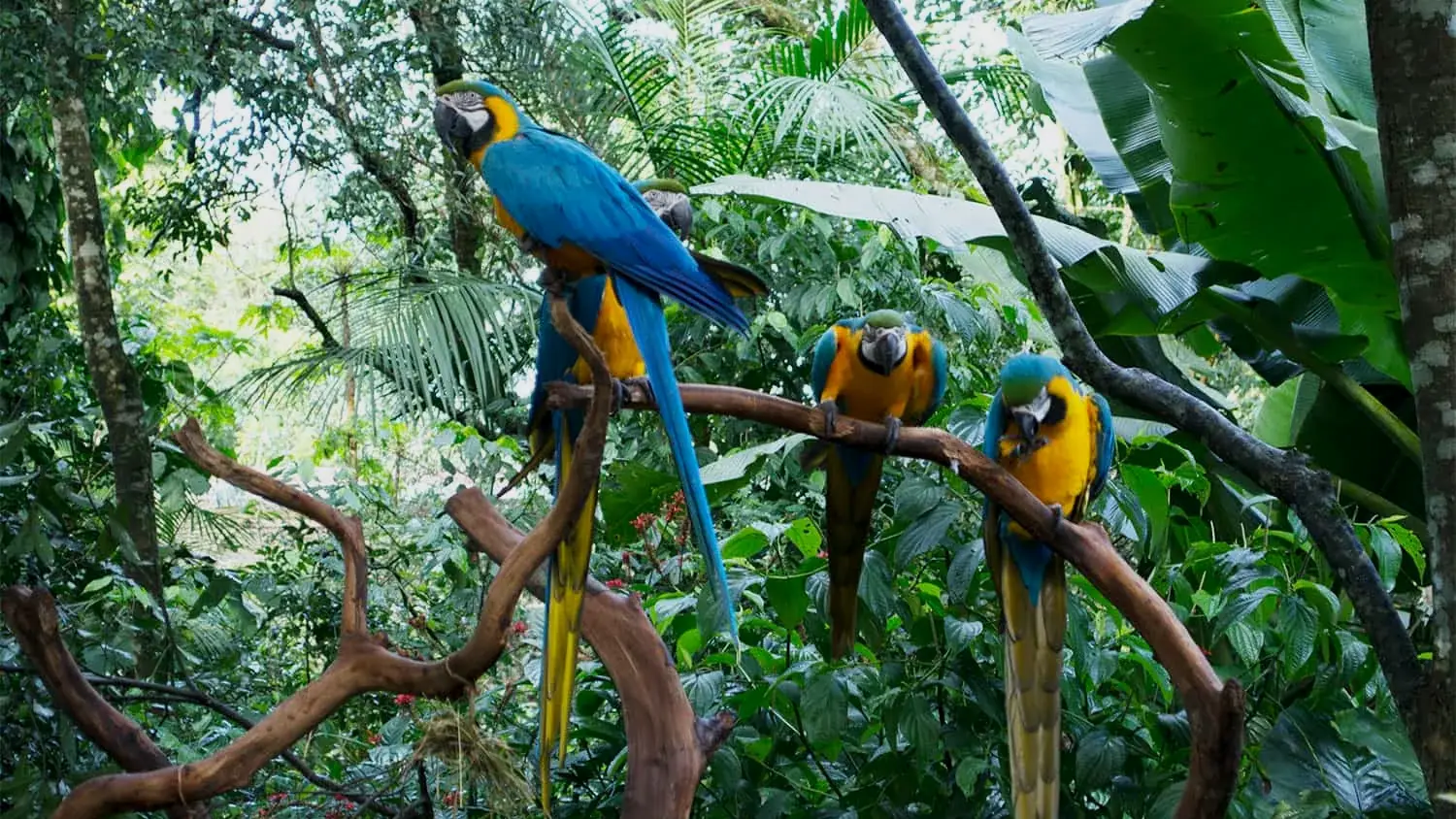
In the aviaries, clouds of parakeets ripple through the branches while macaws paint the sky in blue, red and gold, and toucans show off those iconic bills.
Step inside the forest: in the immersion aviary there is no glass between you and the birds, just canopy, branches and open sky.
Move slowly, keep voices low and let the birds set the pace. Wide accessible paths, perches at natural height and feeders encourage natural behavior.
For filming, watch the light: late morning and mid-afternoon warm the feathers. No touching or feeding; your best shot comes from patience, not from getting closer.
Among the Atlantic rainforest birds, look for the red-legged seriema, flocks of macaws, toucans and butterflies; you'll also see reptiles like iguanas, caimans and aquatic turtles.
In the wetland areas, watch for the roseate spoonbill, the scarlet ibis and flamingos. The park also keeps the grey crowned crane, the African grey parrot and the cassowary from Australia.
(Aviary footage, ambient sound)
As you move from aviary to aviary, notice how the park's design keeps you close to natural behavior: fruit stations in the foliage, perches at canopy height and calm zones.
For families and travelers with reduced mobility, the flat paved trail and frequent rest stops make the day flow easily. If you're visiting the falls the same day, starting here adds context: you meet the rainforest's residents before witnessing the river's power.
This is what is said in the video, transcribed as spoken.
Questions this video answers
Where is the Bird Park?
On Rodovia das Cataratas (BR-469), Foz do Iguaçu, right across from the entrance of Iguaçu National Park, next to the helicopter pad.
Are the birds captive?
Many arrived through official seizures (trafficking, mistreatment) and could not be released; others hatched in conservation programs. The park is focused on Atlantic rainforest species.
What does an immersion aviary mean at Parque das Aves?
It means there is no glass between you and the birds: you walk inside the aviary, under canopy and open sky, with macaws, parakeets and toucans perched at natural height. The paths are wide and accessible. Move slowly and keep your voice low — the birds set the pace, not the visitor.
Which birds can you expect to see?
Macaws, toucans, parakeets and the red-legged seriema among the Atlantic rainforest species, plus roseate spoonbills, scarlet ibis and flamingos in the wetland areas. The park also keeps species from elsewhere, such as the grey crowned crane, the African grey parrot and the cassowary. Iguanas, caimans and turtles share the same trail.
Can you photograph the birds, and are there rules?
Yes. No touching and no feeding, in any area. Late morning and mid-afternoon give the warmest light on the feathers, and the best frame comes from standing still and waiting rather than from getting closer.
More questions about planning the visit are answered on the Bird Park guide.
Honest notes
footage from our own visits; conditions (water flow, weather, closures) change, so always check the official park channels for your date. We do not quote prices in videos, because they change; current prices are on our site.
Official sources
Plan this with us
Prices, opening hours and what is included are kept up to date on the Bird Park guide — that is where the live numbers are. Tell us your dates and group size and we return a written itinerary and a fixed quote before you pay anything.